Author: Stephen Montoya
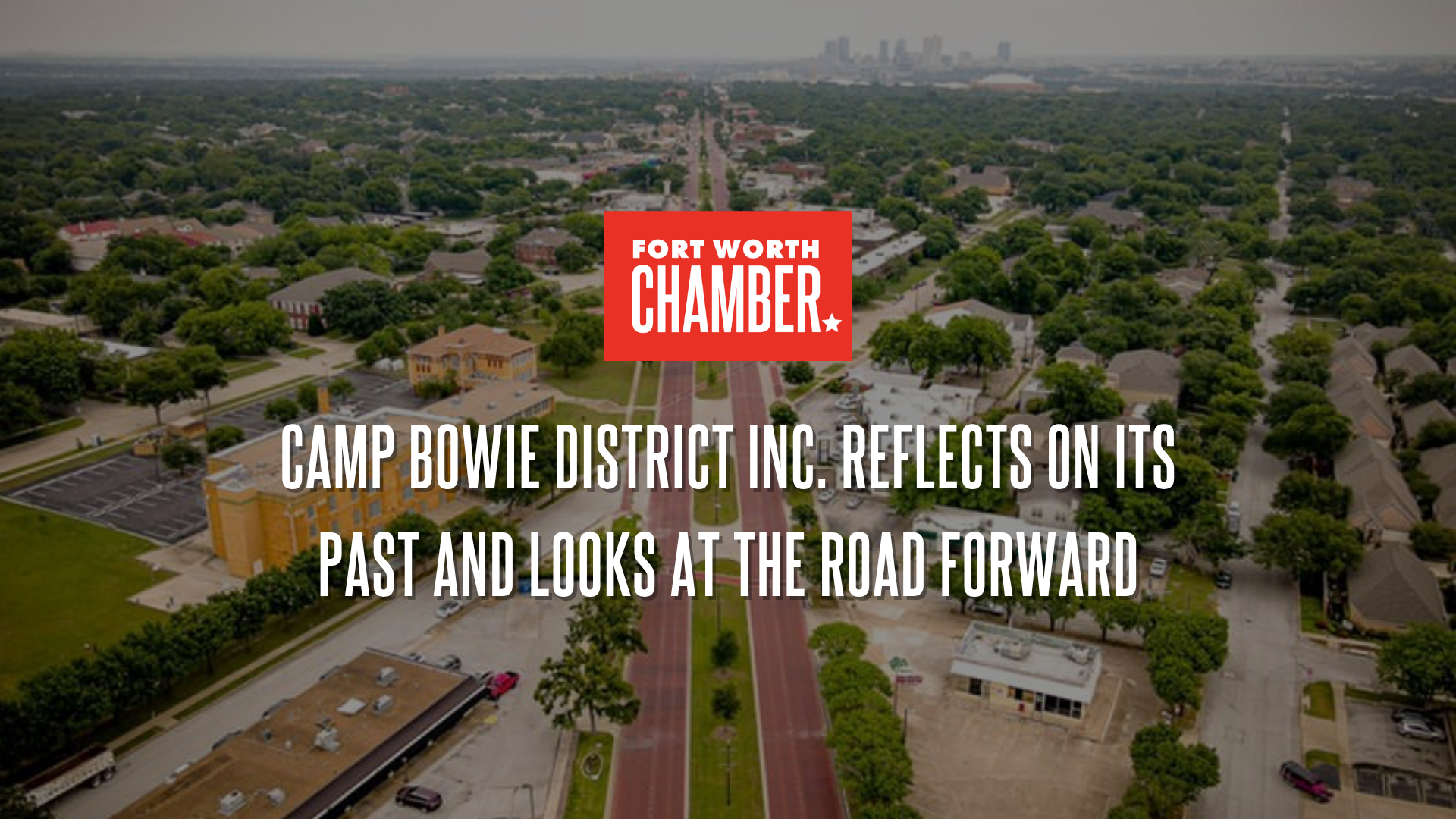
For 25 years, Camp Bowie District Inc. has helped preserve and promote one of Fort Worth’s most recognizable corridors—a six-mile stretch where brick roads, locally owned businesses, historic homes, and community pride intersect in a way that feels distinct to Cowtown.
What began as a conversation about sustaining a vital commercial corridor over two decades ago has grown into one of the city’s most enduring success stories. Today, the district stands not only as a hub for commerce but also as a symbol of neighborhood identity and collaboration.
Now in her fifth year as Executive Director of Camp Bowie District, Inc., Lydia Guajardo Rickard understands the boulevard from both professional and personal perspectives. Since she grew up on Camp Bowie, she believes the district’s achievements are closely tied to the strength of its relationships.
“I think the business community that we have built within our district has been a huge accomplishment,” Rickard said. “Business owners and property owners feel comfortable coming to us when they need assistance, whether it’s development services or security-focused issues. But beyond that, the sense of community between neighbors has really strengthened.”
That spirit of collaboration has become a defining feature of the corridor. Rickard cites neighborhood gatherings and growing partnerships among businesses as evidence that Camp Bowie’s success extends beyond individual storefronts.
“Success isn’t just in your own four walls,” she said. “Success is down the block.”
Twenty-five years ago, the district looked much different. Rickard noted that the corridor lacked much of the visual identity residents now associate with Camp Bowie. Early leaders prioritized planting trees, landscaping medians, and creating the aesthetic character that has since become synonymous with the boulevard.
Today, the district’s iconic appearance is matched by a strong commitment to supporting local businesses. Camp Bowie remains one of Fort Worth’s few lengthy commercial corridors made up predominantly of locally owned establishments, many operated by families with deep ties to the city.
“Live local, shop local, dine local isn’t just a catchphrase for us,” Rickard said. “It’s a way of life.”
The Fort Worth Chamber of Commerce has played a significant role in the district’s development since its early days. According to Rickard, discussions within the Chamber helped spark the organization's formation 25 years ago, while market research and community partnerships helped establish its foundation.
Today, that relationship continues to provide value through collaboration, idea-sharing, and citywide problem-solving.
As the district celebrates its silver anniversary, Rickard believes Camp Bowie’s enduring appeal lies in its ability to balance history with growth. Landmarks like Arlington Heights United Methodist Church coexist alongside newer additions such as The Bowie House, all while maintaining the character residents have long cherished.
“What separates us from anywhere else in Fort Worth is our sense of community and our pride in maintaining the characteristics of the district,” Rickard said. “The ability to serve this community is honestly a daily honor.”